


JT
A Dependable Workhorse with Character
When choosing an acoustic guitar, I was looking for an instrument that would be more resistant to environmental changes and could comfortably handle playing at home, outdoors, and while traveling. For that reason, an all-laminate construction was the obvious and practical choice.
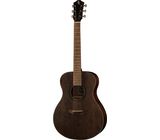
Laminate guitars are often considered a compromise in terms of sound quality, so I wanted to find an instrument that compensates for those limitations through thoughtful design and quality components. That is exactly what drew me to the Baton Rouge X11LS/F-SCC. Unlike many guitars in this price range, it features a GraphTech NuBone nut and saddle instead of inexpensive ABS plastic, which can further rob a laminate instrument of some of its natural liveliness and tonal character.
Build Quality and Construction
The overall build quality made a very positive first impression. The guitar arrived well set up, with comfortable action, smoothly finished frets, and excellent intonation across the entire fretboard.
The only maintenance I felt was necessary was treating the rather dry fingerboard and bridge with mineral oil. This noticeably revitalized the wood and enhanced its natural grain pattern.
The finish is described by the manufacturer as “Open Pore.” In practice, this applies mainly to the back and sides. The spruce top is covered with a thin matte finish without visible open pores. I came across several comments online claiming that the top was merely a printed wood imitation. Naturally, I paid close attention to this aspect and can confidently confirm that it is genuine spruce wood with a dark stain, not a printed decorative veneer.
Another pleasant surprise was the interior workmanship. There were no excessive glue residues, sawdust, or signs of rushed assembly. Everything appeared clean, tidy, and well executed.
The neck profile and width strike an excellent balance between fingerstyle playing and strumming. It feels comfortable in the hand, and long playing sessions remain effortless.
The tuning machines feature an attractive light vintage patina and perform reliably. The guitar holds tuning well both during extended playing sessions and after sitting unused for several days.
Sound
The overall tonal character of the instrument is balanced, articulate, and musical. The smaller Folk-sized body does not produce the overwhelming bass response of a dreadnought, but it compensates with excellent note definition, quick response, and impressive clarity.
The shorter 630 mm scale length also contributes significantly to the playing experience. It makes the guitar feel more comfortable under the fingers and allows it to respond easily even to a lighter touch.
Strings – The Final Piece of the Puzzle
A crucial factor in achieving the guitar’s full potential turned out to be string selection. In my view, strings act as the final equalization stage of the instrument.
The guitar originally came fitted with D’Addario EXP11 strings (80/20 Bronze). These are high-quality and widely respected strings that deliver a bright, crisp, and highly articulate sound. However, on this particular guitar, I found them somewhat too metallic and overly chimey. While impressive at first, certain high frequencies became fatiguing during longer listening sessions. At the same time, the lower end of the spectrum felt somewhat flat and did little to enhance the character of the Folk-sized body.
After considerable experimentation, I eventually settled on Galli GFS1256 Nickel Bronze strings, and this is where the instrument truly came alive.
It is not that these strings sound darker. The highs are still present and clearly audible, but they are no longer exaggerated or harsh. The excessive metallic edge is gone, and the entire frequency spectrum feels more coherent and balanced. The best way I can describe it is that it sounds as if a skilled studio engineer carefully fine-tuned the EQ and removed everything that unnecessarily stood out.
The bass response gained both depth and authority without becoming muddy. Notes have shape, definition, and remain clearly distinguishable even during more complex passages. The midrange is richer and more natural, giving the guitar a more mature and musical voice.
An additional benefit is the feel under the fingers. The strings feel smoother, produce less finger noise when shifting positions, and generally feel more refined whether playing fingerstyle or with a pick.
Final Thoughts
The Baton Rouge X11LS/F-SCC is not a guitar that tries to impress with oversized bass response or exaggerated sparkle. Instead, it is a thoughtfully designed, well-built instrument that offers an excellent balance between durability, comfort, and tonal quality.
When paired with the right strings, it delivers a surprisingly mature, balanced, and inspiring sound that feels far more sophisticated than one might expect from an all-laminate guitar in this category.
If you are looking for a reliable acoustic guitar that can handle everyday use without constant worry, while still offering a genuinely musical and rewarding playing experience, the Baton Rouge X11LS/F-SCC deserves serious consideration.
Laminate guitars are often considered a compromise in terms of sound quality, so I wanted to find an instrument that compensates for those limitations through thoughtful design and quality components. That is exactly what drew me to the Baton Rouge X11LS/F-SCC. Unlike many guitars in this price range, it features a GraphTech NuBone nut and saddle instead of inexpensive ABS plastic, which can further rob a laminate instrument of some of its natural liveliness and tonal character.
Build Quality and Construction
The overall build quality made a very positive first impression. The guitar arrived well set up, with comfortable action, smoothly finished frets, and excellent intonation across the entire fretboard.
The only maintenance I felt was necessary was treating the rather dry fingerboard and bridge with mineral oil. This noticeably revitalized the wood and enhanced its natural grain pattern.
The finish is described by the manufacturer as “Open Pore.” In practice, this applies mainly to the back and sides. The spruce top is covered with a thin matte finish without visible open pores. I came across several comments online claiming that the top was merely a printed wood imitation. Naturally, I paid close attention to this aspect and can confidently confirm that it is genuine spruce wood with a dark stain, not a printed decorative veneer.
Another pleasant surprise was the interior workmanship. There were no excessive glue residues, sawdust, or signs of rushed assembly. Everything appeared clean, tidy, and well executed.
The neck profile and width strike an excellent balance between fingerstyle playing and strumming. It feels comfortable in the hand, and long playing sessions remain effortless.
The tuning machines feature an attractive light vintage patina and perform reliably. The guitar holds tuning well both during extended playing sessions and after sitting unused for several days.
Sound
The overall tonal character of the instrument is balanced, articulate, and musical. The smaller Folk-sized body does not produce the overwhelming bass response of a dreadnought, but it compensates with excellent note definition, quick response, and impressive clarity.
The shorter 630 mm scale length also contributes significantly to the playing experience. It makes the guitar feel more comfortable under the fingers and allows it to respond easily even to a lighter touch.
Strings – The Final Piece of the Puzzle
A crucial factor in achieving the guitar’s full potential turned out to be string selection. In my view, strings act as the final equalization stage of the instrument.
The guitar originally came fitted with D’Addario EXP11 strings (80/20 Bronze). These are high-quality and widely respected strings that deliver a bright, crisp, and highly articulate sound. However, on this particular guitar, I found them somewhat too metallic and overly chimey. While impressive at first, certain high frequencies became fatiguing during longer listening sessions. At the same time, the lower end of the spectrum felt somewhat flat and did little to enhance the character of the Folk-sized body.
After considerable experimentation, I eventually settled on Galli GFS1256 Nickel Bronze strings, and this is where the instrument truly came alive.
It is not that these strings sound darker. The highs are still present and clearly audible, but they are no longer exaggerated or harsh. The excessive metallic edge is gone, and the entire frequency spectrum feels more coherent and balanced. The best way I can describe it is that it sounds as if a skilled studio engineer carefully fine-tuned the EQ and removed everything that unnecessarily stood out.
The bass response gained both depth and authority without becoming muddy. Notes have shape, definition, and remain clearly distinguishable even during more complex passages. The midrange is richer and more natural, giving the guitar a more mature and musical voice.
An additional benefit is the feel under the fingers. The strings feel smoother, produce less finger noise when shifting positions, and generally feel more refined whether playing fingerstyle or with a pick.
Final Thoughts
The Baton Rouge X11LS/F-SCC is not a guitar that tries to impress with oversized bass response or exaggerated sparkle. Instead, it is a thoughtfully designed, well-built instrument that offers an excellent balance between durability, comfort, and tonal quality.
When paired with the right strings, it delivers a surprisingly mature, balanced, and inspiring sound that feels far more sophisticated than one might expect from an all-laminate guitar in this category.
If you are looking for a reliable acoustic guitar that can handle everyday use without constant worry, while still offering a genuinely musical and rewarding playing experience, the Baton Rouge X11LS/F-SCC deserves serious consideration.
0
0
Ohlásit hodnocení
L
Zatím naprostá spokojenost.
Nádhera.Jen me zaraziL odstín prední desky.Na fotce vypadá hnedý mahagon,ale je do cerna.Už jsem si zvykl,tak je to v pohode,je to jen prkotina.Vymenil jsem struny za 9. Pridelal jsem aktivní elektroniku,snížil o 1 mm kobylku a kytara hraje sama. Do pocítace nahrávám pres mikrofon Rode M3 a prímo pres zvukovku.Pro mne zvuk co chci. Proste akustika.Doporucuji pevný kufr Ortega OCCSTD.Na kytaru jak delaný.
Kytaru jsem kupoval hlavne kvuli šírce nultého pražce 46 mm.
Kytaru jsem kupoval hlavne kvuli šírce nultého pražce 46 mm.
0
0
Ohlásit hodnocení